
Exploring Auckland’s Waterfront: A Guide to Coastal Walks and Drives

Exploring Auckland’s Waterfront: A Local Guide to Coastal Beauty and Urban Style
Key Takeaways
- Auckland’s waterfront is a linear journey stretching from the urban Viaduct Harbour to the relaxed eastern bays.
- Tāmaki Drive offers 8.2 kilometres of scenic coastal views, best enjoyed through a combination of driving and short walks.
- Historical sites like Bastion Point and the Ferry Building provide deep cultural context to the modern maritime scenery.
- Private transport eliminates the stress of parking and navigation, allowing for a flexible itinerary tailored to your pace.
Auckland is defined by its relationship with the sea. The waterfront serves as the city’s front porch, a place where high-end dining meets the rugged beauty of the Waitematā Harbour. Exploring Auckland’s waterfront reveals a city of contrasts, where superyachts moored in the Viaduct sit only a short drive away from the quiet, pōhutukawa-lined beaches of the eastern bays.
The layout of the waterfront is linear, making it ideal for a structured day of exploration. Most visitors begin in the central hub of the Viaduct and Wynyard Quarter before heading east along the coast. While walking the entire length is possible for the dedicated, the distance and variable weather make a chauffeured approach far more comfortable for those wanting to see every highlight without fatigue.
The Urban Heart: Viaduct Harbour and Wynyard Quarter
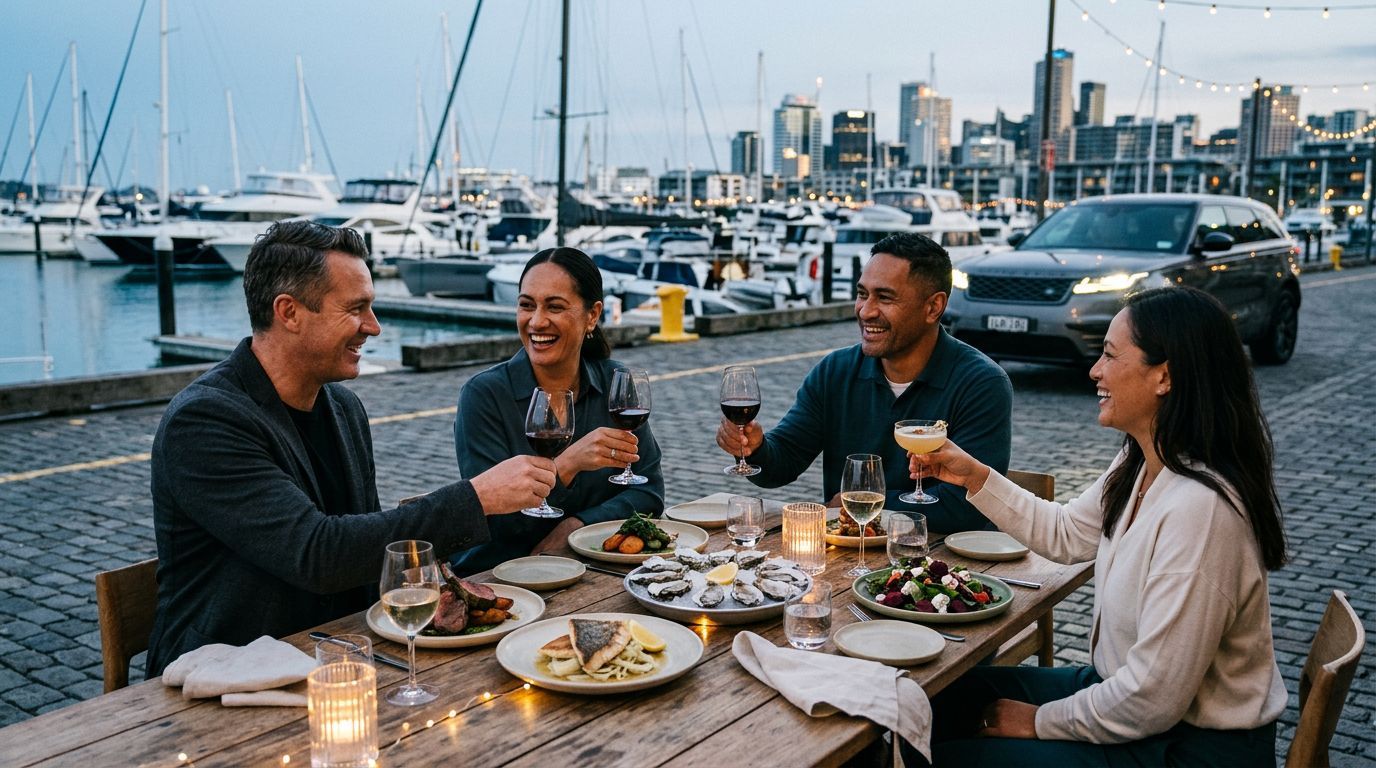
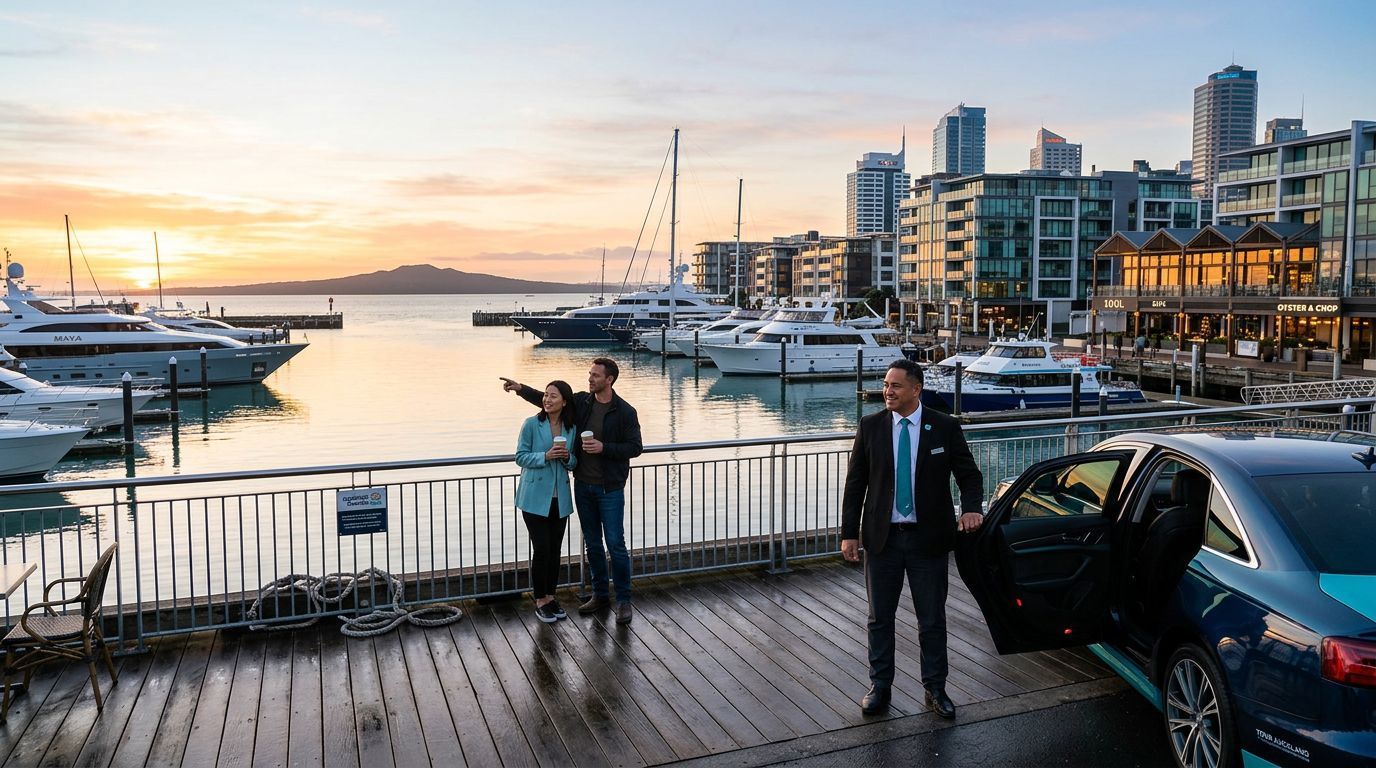
Viaduct Harbour represents the modern face of Auckland. Once a commercial basin for fishing and shipbuilding, the area underwent a massive transformation for the 2000 America’s Cup. Today, Viaduct Harbour covers 0.60 square kilometres and functions as a dense precinct of residential apartments, upscale restaurants, and bars. It remains the best place in the city to view impressive yachts while enjoying a meal by the water.
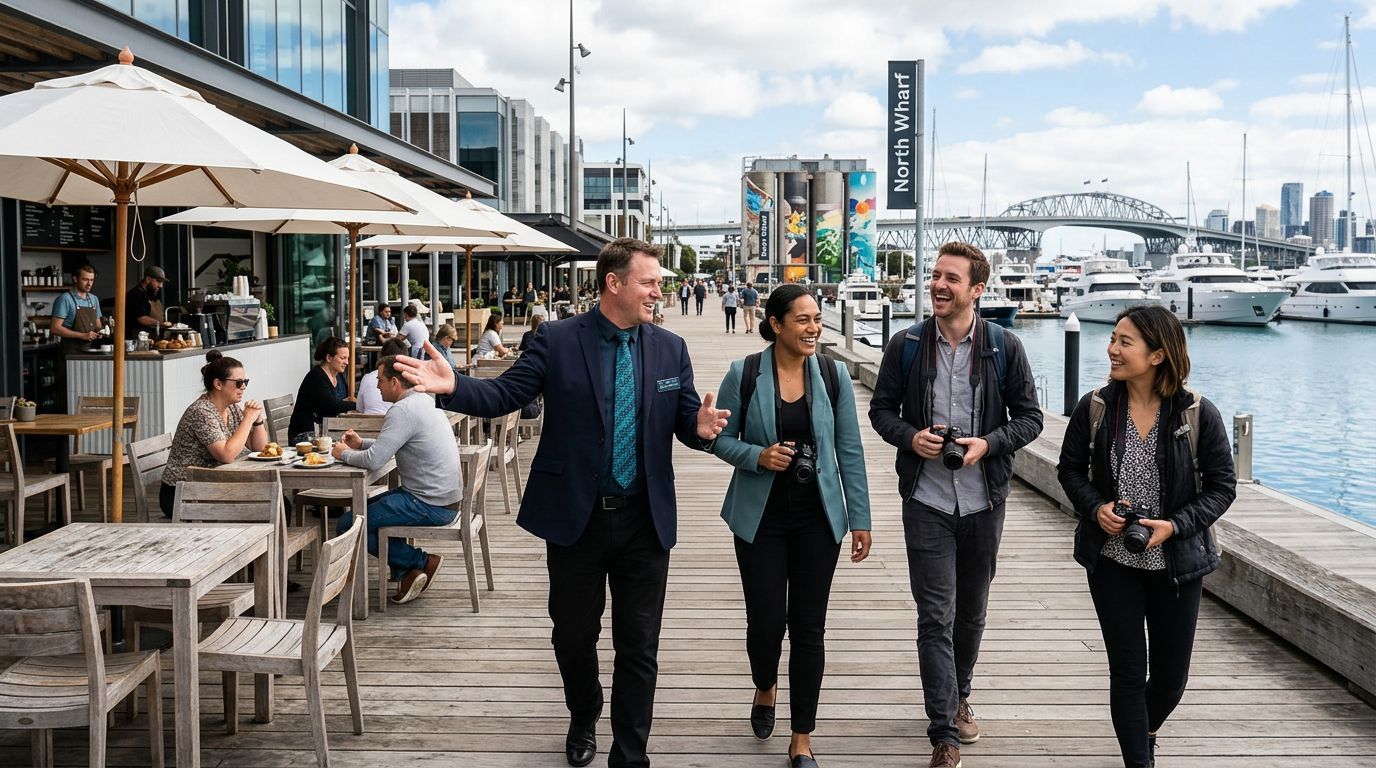
Adjacent to the Viaduct is Wynyard Quarter, a regenerated former industrial site previously known as the Tank Farm. This area prioritises public space and family-friendly environments. The North Wharf Promenade features a variety of casual eateries, while Silo Park offers open spaces and public art installations. Walking across the Wynyard Crossing bridge connects these two areas, providing a loop that showcases the city’s architectural evolution.
For those interested in a wider view of the city’s attractions, our Auckland Itinerary provides a curated look at how these waterfront spots fit into a broader city tour.
Historic Wharves and Maritime Heritage
The central waterfront is anchored by the historic Ferry Building and the surrounding wharves. This area acts as the city’s transport heart, where ferries depart for Devonport and the Hauraki Gulf islands. Queens Wharf and Princes Wharf serve as the primary gateways for international travellers arriving by sea. Princes Wharf is a 24-hour public space that houses the five-star Hilton Auckland and offers a public viewing deck at its northern end, perfect for watching ships navigate the harbour.
Nearby, the New Zealand Maritime Museum offers insights into the country’s seafaring history. A short stroll around these wharves allows you to feel the pulse of the working harbour. If you are arriving on a ship and have limited time, our Auckland Cruise Excursion guide explains how to maximise your shore window with efficient transport from these terminals.
Tāmaki Drive: The Scenic Coastal Route
Leaving the city centre behind, Tāmaki Drive follows the southern edge of the harbour for approximately 8.2 kilometres. Completed in 1932, this road is often called Auckland’s waterfront road. It is iconic for its views of Rangitoto Island and the pōhutukawa trees that line the cliffs. During the summer months, these trees, including the distinctive Kermadec pōhutukawa, burst into bright red blooms.
The road includes a separated path popular with walkers and cyclists. According to Wikipedia, the drive links the city to the eastern bays of Ōrākei, Mission Bay, Kohimarama, and St Heliers. While the path is flat and scenic, the shared nature of the space means it can become crowded. A private vehicle allows you to enjoy the views from an elevated perspective and stop at specific lookouts that are difficult to access on foot.
Cultural Significance at Bastion Point and Ōkahu Bay
One of the most significant stops along Tāmaki Drive is Ōkahu Bay and the headland above it, known as Bastion Point. Ōkahu Bay was the site of the main Ngāti Whātua Ōrākei village. In 1952, the local council forcibly evicted residents and cleared the land under the Public Works Act, an event that remains a central part of New Zealand’s land rights history.
Above the bay sits the Michael Joseph Savage Memorial Park. Opened in March 1943, the park contains the tomb and memorial for New Zealand’s first Labour Prime Minister. The Art Deco design by Tibor Donner and Anthony Bartlett is surrounded by manicured gardens and offers panoramic views of the Hauraki Gulf. This is a primary stop for our guests, as the drive to the top provides the best vantage point in the city without the steep climb.
At the eastern end of Ōkahu Bay, you will find SEA LIFE Kelly Tarlton’s Aquarium. Housed in repurposed stormwater tanks, it features underwater tunnels that allow you to see sharks and rays from below. More details on exploring this section of the coast can be found at AucklandNZ.
The Eastern Bays: Mission Bay to St Heliers
Mission Bay is the most popular of the eastern suburbs, located about a 20-minute walk from Kelly Tarlton’s. The area centres on Selwyn Reserve, which features the Trevor Moss Davis Memorial Fountain, a marble Art Deco landmark. The beach is a favourite for swimming and picnics, while the across-the-road café culture offers everything from high-end dining to the famous Movenpick ice cream.
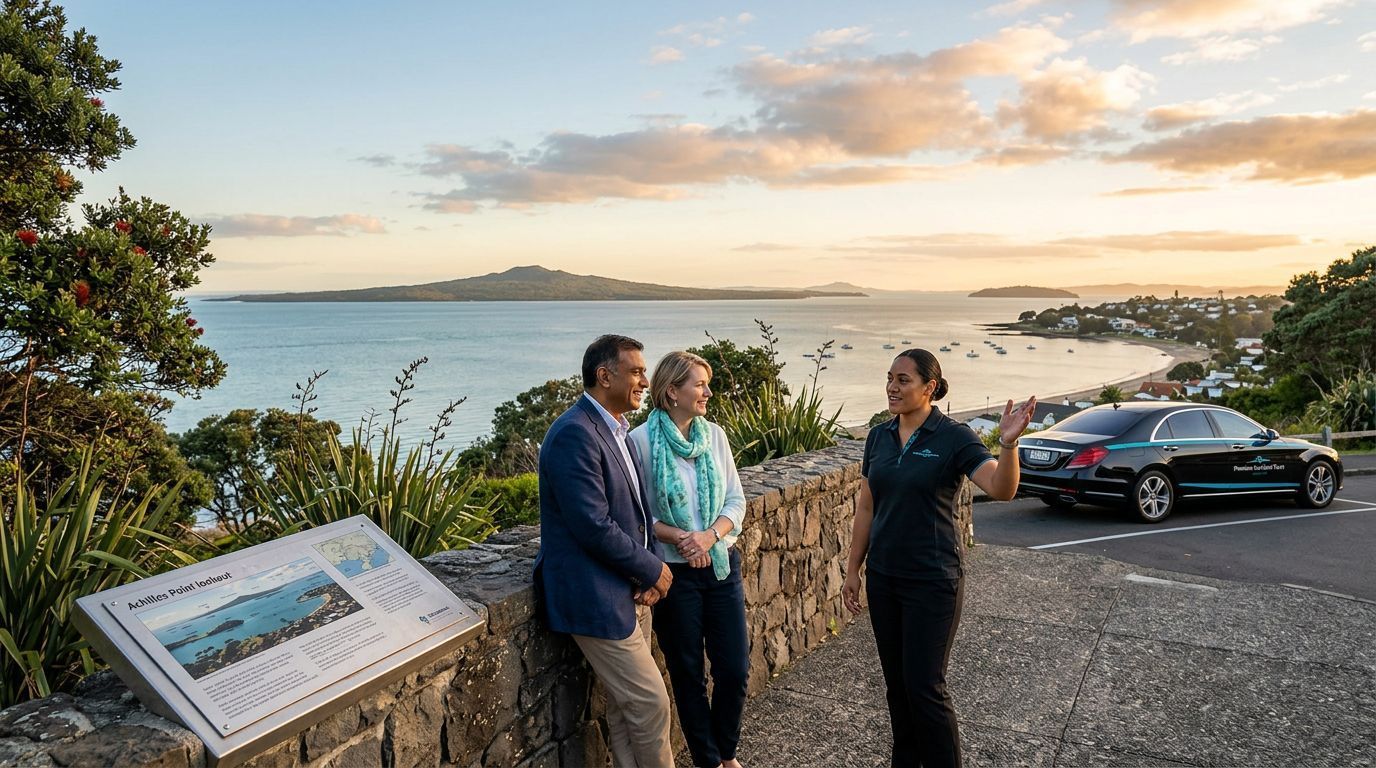
Continuing east, you reach Kohimarama Beach, the longest stretch of sand along this route. It offers a quieter atmosphere, favoured by local swimmers and sailors. The journey ends at St Heliers, a village-style suburb with a relaxed feel. For the best views of the entire Hauraki Gulf, a short drive up to Achilles Point above St Heliers is essential. The lookout provides a clear sightline to multiple islands and the distant horizon.
For those planning a full day of discovery, our guide to Auckland Uncovered provides further context on why these seaside suburbs are essential to the city’s identity.
Planning Your Waterfront Itinerary
The best way to experience the waterfront depends on your available time and mobility. We recommend two primary ways to structure your visit.
The Half-Day Urban and Coastal Blend
Start with a morning walk through Viaduct Harbour and Wynyard Quarter to see the city wake up. After coffee at North Wharf, arrange for a private transfer to take you along Tāmaki Drive. Stop at Bastion Point for photos, then continue to Mission Bay for lunch. A vehicle pick-up after lunch ensures you return to your hotel or the cruise terminal comfortably, avoiding the busy afternoon buses.
The Full-Day Scenic Exploration
A full-day tour allows for a deeper exploration. Your driver can pick you up from your accommodation and provide a guided drive through the historic wharves before heading east. This itinerary includes time for the Maritime Museum or Kelly Tarlton’s, followed by a slow drive through all the eastern bays. You can include a stop at Achilles Point and perhaps return to the city via the leafy suburb of Parnell or the Auckland Museum for a change of scenery.
Enhancing the Experience with Private Transport
Auckland’s waterfront is beautiful, but its linear nature presents logistical challenges. Walking from the Ferry Building to St Heliers is a 10-kilometre journey that takes roughly two hours one way. While the Tāmaki Link bus runs every 15 minutes, it can be crowded during peak tourist season and does not stop at the scenic hill-top lookouts like Bastion Point.
Choosing a private driver-guide transforms the trip. We provide the comfort of a climate-controlled vehicle, which is essential given Auckland’s famously changeable weather. Instead of navigating parking at Mission Bay, which is notoriously difficult on weekends, you can be dropped at the beach and picked up whenever you are ready. Our local knowledge adds layers to the scenery, as we share the stories of the America’s Cup, the history of Ngāti Whātua Ōrākei, and the best local spots for a quiet coffee away from the crowds. We ensure your exploration of the City of Sails is relaxed, informative, and perfectly paced.