
New Zealand Eco-Travel: 5 Sustainable Secrets for a Premium Aotearoa Adventure

Sustainable Travel: 5 Ways to Explore New Zealand Responsibly
Key Takeaways
- Understanding the Tiaki Promise helps you travel as a guardian of Aotearoa.
- Choosing Qualmark-certified operators ensures your travel meets global sustainability standards.
- Supporting local, Māori-owned, and small businesses keeps tourism benefits within the community.
- Professional guided tours offer a safer, lower-impact alternative to self-driving on New Zealand roads.
- Respecting Department of Conservation guidelines protects our unique wildlife and landscapes.
New Zealand is a place of immense natural beauty, from the rugged coastlines of the South Island to the geothermal wonders of the north. As we welcome guests to our shores, we view ourselves as kaitiaki, or guardians, of this land. We believe that premium travel and environmental care go hand in hand. Exploring Aotearoa responsibly allows you to enjoy a deeply personal experience while ensuring these landscapes remain pristine for those who follow.
The World Tourism Organization defines sustainable tourism as travel that accounts for its current and future economic, social, and environmental impacts. In New Zealand, this means making choices that protect nature, respect local cultures, and support our regional economies. Whether you are visiting a vineyard in Marlborough or exploring the Waitomo Caves, your choices as a traveller make a tangible difference.
1. Embrace the Tiaki Promise
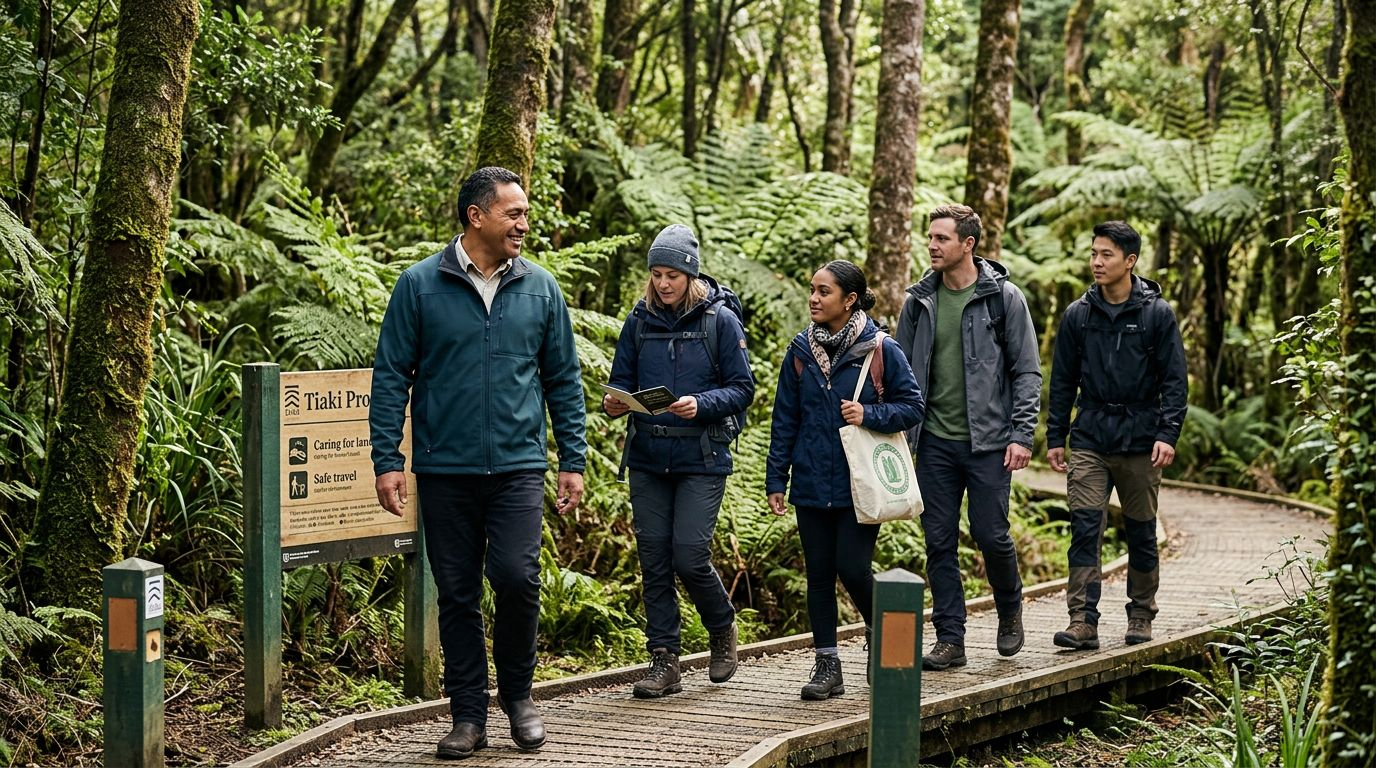
The Tiaki Promise is a national commitment to care for New Zealand. In te reo Māori, Tiaki means to care for people and place. This pledge asks everyone who lives in or visits our country to act as a guardian, protecting and preserving our home. When you follow the Tiaki Promise, you commit to three core pillars: caring for the land, sea, and nature: travelling safely with care and consideration: and respecting the local culture with an open heart.
These commitments align with the Māori values of kaitiakitanga (guardianship) and manaakitanga (hospitality and respect). We embody these values on every journey we lead, helping our guests understand the stories behind the landscapes. You can learn more about how we integrate these values into our service on our About Us page.
Practical ways to uphold this promise include staying on marked tracks in national parks and respecting sites that are culturally significant to iwi (tribes). Small actions, such as removing your shoes before entering a marae or ensuring you leave no trace on a beach, demonstrate a deep respect for the host culture.
2. Choose Eco-Certified and Qualmark-Rated Operators
Identifying truly sustainable travel options is simplified by looking for official certifications. Qualmark is New Zealand tourism’s official quality assurance organisation. It provides independent assessments of businesses based on their environmental impact, social responsibility, and safety standards. Operators are awarded Bronze, Silver, or Gold Sustainable Tourism Business Awards based on their performance.
A Gold award represents the highest standard of sustainability in New Zealand. These businesses lead the way in delivering exceptional experiences that protect the environment. Furthermore, Qualmark’s criteria are recognised by the Global Sustainable Tourism Council (GSTC), meaning they meet international benchmarks for responsible travel. Selecting certified operators ensures your investment supports businesses that take their environmental responsibilities seriously.
3. Support Local and Regional Economies
Sustainable travel extends beyond environmental protection to include the economic wellbeing of local communities. Spending your travel budget with locally owned businesses ensures that the benefits of tourism stay within the region. This approach supports jobs and helps preserve the unique character of New Zealand’s small towns.
Consider choosing a locally owned boutique lodge in Central Otago or visiting a Māori-owned tourism experience to gain a deeper cultural perspective. Purchasing crafts directly from local artisans or dining at independent cafes in places like Napier or Nelson provides direct support to the people who live there. This focus on local connection is a hallmark of bespoke luxury travel, where the value lies in authentic experiences rather than mass-produced tourism.
4. Protect Wildlife and Natural Landscapes
New Zealand is home to rare species that are often found nowhere else on Earth. Protecting these animals requires travellers to follow strict guidelines set by the Department of Conservation (DOC). When watching wildlife, such as seals on the Kaikōura coast or rare birds in the Eglinton Valley, maintain a respectful distance and avoid feeding them. Human food can be harmful to native species and alters their natural behaviour.
The "leave no trace" principle is vital for maintaining our wilderness areas. This involves taking all rubbish with you, using provided toilet facilities, and sticking to established paths to avoid damaging sensitive flora. If you choose to explore via camping, ensure you understand the rules around responsible freedom camping. Many areas have strict regulations to prevent environmental degradation, and breaches can result in significant fines. For many, travelling with a professional guide is the simplest way to ensure all environmental regulations are met without the stress of navigating local bylaws.
5. Opt for Safer, Guided Transport
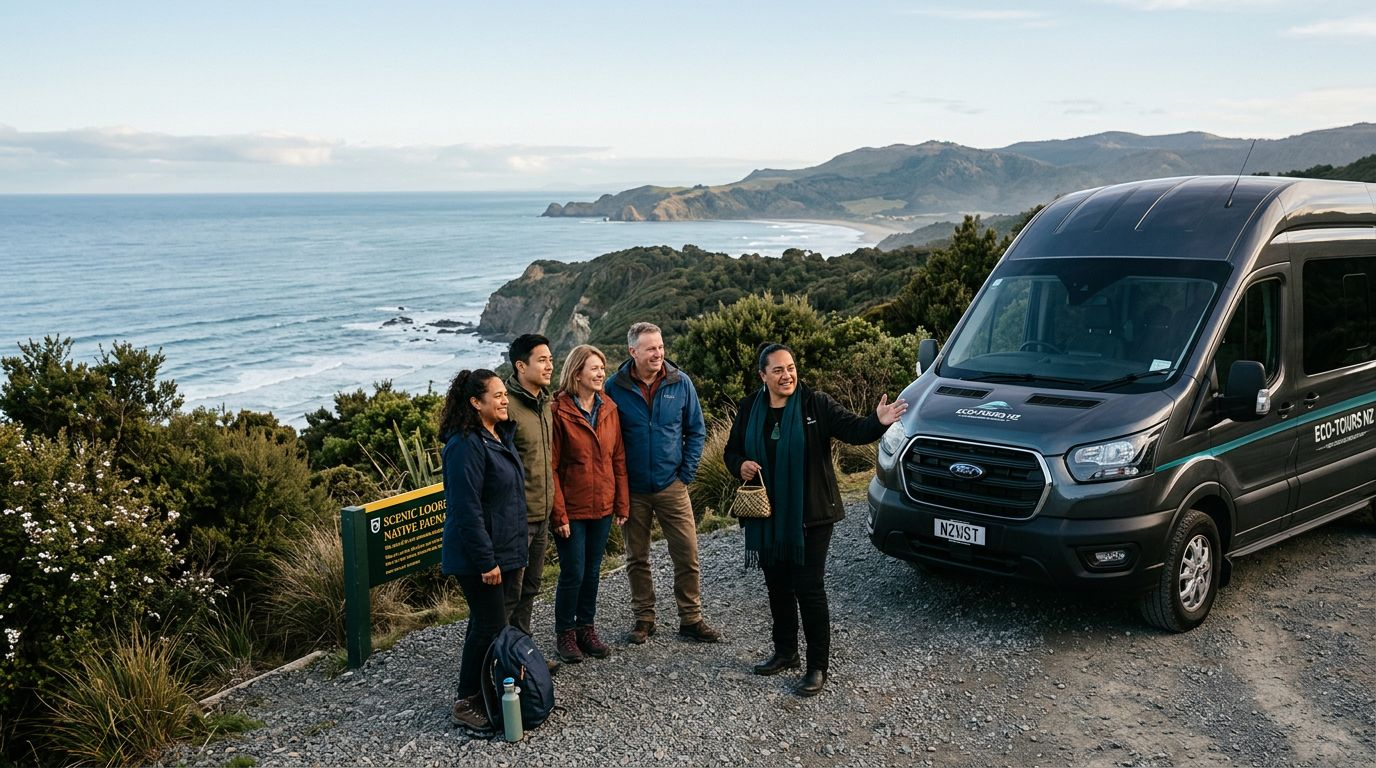
Choosing a professional driver-guide is a sustainable choice that prioritises both safety and environmental efficiency. New Zealand roads are often narrow, winding, and subject to rapid weather changes. Professional drivers understand these local conditions intimately, which reduces the risk of accidents and ensures a smoother journey for everyone on the road. This approach aligns with the "travel safely" pillar of the Tiaki Promise.
Using a private guided service also reduces the need for multiple rental vehicles, particularly for small groups. A single, well-maintained vehicle with an expert at the wheel is a more efficient way to navigate the country. It allows you to focus on the scenery and the stories of the land while your guide manages the logistics. For more information on why professional transport is a preferred choice for the mindful traveller, read our guide to New Zealand tours.
Sustainable travel in New Zealand is about moving through the landscape with intention. By choosing eco-tourism and sustainable travel options, you become part of the effort to protect Aotearoa. We invite you to join us in this mission, exploring our beautiful country with the comfort, safety, and respect it deserves.